
Top Benefits of Using Insulated Aluminum Roofing Sheets
In modern construction, achieving energy efficiency and durability is a top priority. Insulated aluminum roofing sheets have emerged as a leading solution due to their lightweight, corrosion-resistant, and thermally efficient design. Suitable for residential, commercial, and industrial buildings, these roofing sheets provide multiple advantages, including reduced energy consumption, long service life, and excellent weather resistance.
This article explores the top benefits, technical specifications, maintenance requirements, safety considerations, and troubleshooting tips for insulated aluminum roofing sheets, helping architects, contractors, and building owners make informed decisions.
Insulated aluminum roofing sheets significantly reduce heat transfer, helping maintain consistent indoor temperatures. This minimizes heating and cooling costs and contributes to energy-efficient building design.
Aluminum’s high strength-to-weight ratio allows for easy handling and installation while maintaining excellent structural integrity. Lightweight materials also reduce the load on building frames.
The aluminum surface, often coated with PVDF or PE, resists rain, UV rays, and industrial pollutants, ensuring long-term durability. These sheets are ideal for coastal or industrial environments where corrosion is a concern.
Many insulated aluminum roofing sheets feature fire-retardant insulation cores (PU, PIR, or mineral wool), achieving Class B or higher fire ratings, making them suitable for high-safety applications.
The insulation core dampens sound, reducing external noise from rain, wind, and urban environments, providing a quieter indoor environment.
Aluminum is 100% recyclable, and the energy savings achieved through thermal insulation help lower carbon emissions, supporting green building certifications such as LEED and BREEAM.
| Parameter | Typical Value | Standard / Test Method |
|---|---|---|
| Sheet Thickness | 0.4 – 0.7 mm | ASTM B209 |
| Panel Width | 950 – 1200 mm | GB/T 3880 |
| Insulation Core Thickness | 20 – 100 mm | EN 13165 |
| Thermal Conductivity | 0.020 – 0.025 W/m·K | ASTM C518 |
| Fire Rating | Class B-s1,d0 | EN 13501-1 |
| Tensile Strength | 180 – 250 MPa | ASTM B209 |
| Corrosion Resistance | Salt Spray Test 1000h | ISO 9227 |
| UV Resistance | No significant degradation 2000h | ASTM G154 |
These specifications ensure the performance, safety, and reliability of insulated aluminum roofing sheets under various environmental conditions.
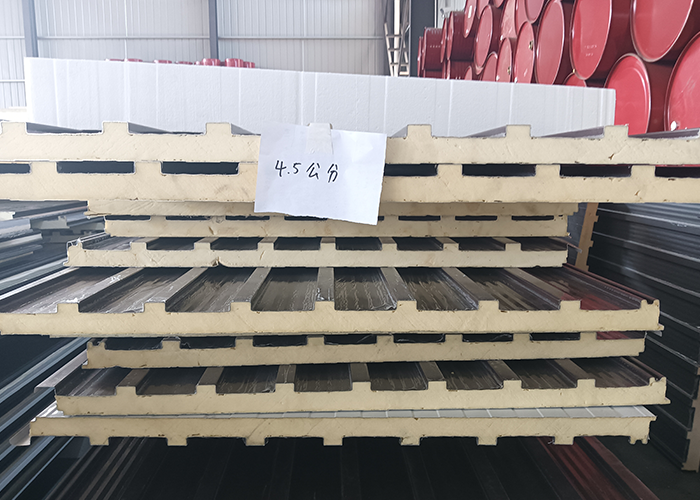
Proper maintenance maximizes the lifespan and efficiency of insulated aluminum roofing sheets.
Quarterly: Remove debris, leaves, and dust from panels and gutters.
Biannual: Wash panels with mild soap and water to remove pollutants and stains. Avoid abrasive cleaning tools.
Annual: Inspect panel coating for signs of wear or UV damage.
| Frequency | Inspection Item |
|---|---|
| Quarterly | Fasteners, joints, sealants |
| Biannual | Surface coating, insulation integrity |
| Annual | Overall panel alignment, corrosion, and deformation |
Avoid walking directly on panels; use safety planks.
Trim nearby trees to prevent leaf accumulation.
Repair minor coating scratches immediately to prevent corrosion.
Insulated aluminum roofing sheets are safe when installed and maintained properly. Key safety considerations include:
Personal Protective Equipment (PPE): Always wear helmets, gloves, and safety harnesses during installation.
Load Limit: Do not exceed the maximum load for walking or storage on the roof.
Fire Safety: Ensure insulation materials meet local fire safety regulations.
Electrical Safety: Avoid contact with live wires during installation.
| Issue | Possible Cause | Recommended Solution |
|---|---|---|
| Water Leakage | Loose fasteners, damaged sealants | Tighten fasteners and reseal joints |
| Panel Deformation | Strong wind or thermal expansion | Check for proper support and expansion allowance |
| Coating Fading | UV exposure or improper cleaning | Use neutral detergent and apply touch-up coating |
| Noise During Expansion | Thermal contraction and expansion | Install flexible fasteners or thermal spacers |
| Reduced Insulation Performance | Water ingress or insulation compression | Replace damaged panels or insulation core |
Prompt detection and repair prevent energy loss, corrosion, and long-term damage.
Roof Preparation: Ensure the roof frame is level and capable of supporting panel weight.
Panel Alignment: Start from the eave and align panels with proper overlap.
Fastening: Use corrosion-resistant screws with washers.
Sealing: Apply high-quality sealant at joints and edges.
Inspection: Check all fasteners and sealants before project completion.
Proper installation ensures maximum thermal efficiency and structural safety.
Insulated aluminum roofing sheets are suitable for:
Residential homes seeking energy-efficient roofing
Commercial buildings and office complexes
Industrial plants and warehouses
Cold storage and refrigeration facilities
Educational and healthcare facilities
They are particularly effective in regions with extreme heat, high humidity, or corrosive environments.
Insulated aluminum roofing sheets provide a high-performance, sustainable, and cost-effective solution for modern energy-efficient buildings. Their benefits include thermal and acoustic insulation, weather resistance, fire safety, lightweight durability, and sustainability. When paired with proper installation, regular maintenance, and safety precautions, these roofing systems offer long-lasting protection and energy savings, making them a smart choice for architects, builders, and building owners worldwide.
Contact Person: Wang Ye
Tel: +86 158 33457666
Email: 944713874@qq.com
Address: South side of Yuxin Highway, Dongxian Village, Yahongqiao Town, Yutian County, Tangshan City, Hebei Province
Search


Copyright © 2025 Tangshan Juze Technology Co., Ltd. All rights reserved
This website uses cookies to ensure you get the best experience on our website.
 Español
 العربية
 हिन्दी
 Tiếng Việt



 Phone
Phone
Comment
(0)